It usually starts small. A start date slips, an invoice looks higher than the quote, or someone says the change you discussed is “extra.” Then the texts get shorter and the stakes get bigger. If that sounds familiar, take a breath. Most contractor disputes can be handled with good records, a calm letter, and a clear next step.
Keep one sobering fact in mind. California’s contractor licensing board says in its own consumer complaint guide that an investigation does not guarantee restitution, and that anyone with more than $10,000 in damages should consult an attorney. The system has tools, but you have to pick the right one for your situation.
This guide explains the key steps in contractor dispute resolution, including what to document, how to handle payment disagreements, and the usual escalation options, from a formal letter to mediation to court. Facts were checked in November 2026. Laws, licensing rules, and court limits vary by state, so treat this as general information and confirm details locally.

Quick answer
Document everything, put your complaint and a deadline in writing, and follow the dispute clause in your contract. If that fails, escalate in order: licensing board or attorney general complaint, mediation or arbitration, then small claims or court for larger amounts. Get legal advice before you withhold money, since the wrong move can weaken your position.
Where most disputes start
Many fights come down to unclear paper. Maine’s Attorney General consumer guide says home construction contracts should be written, and that change orders must also be in writing and show the revised contract price. That guide dates from 2012, so check your own state’s current rules.
Illinois sets a specific bar for repair and remodeling work. According to the Illinois State Bar Association, its Home Repair and Remodeling Act requires a signed contract or work order for work over $1,000, and it lets the Attorney General act against violators. Other states have their own thresholds, so ask your state’s attorney general or licensing board what applies to you.
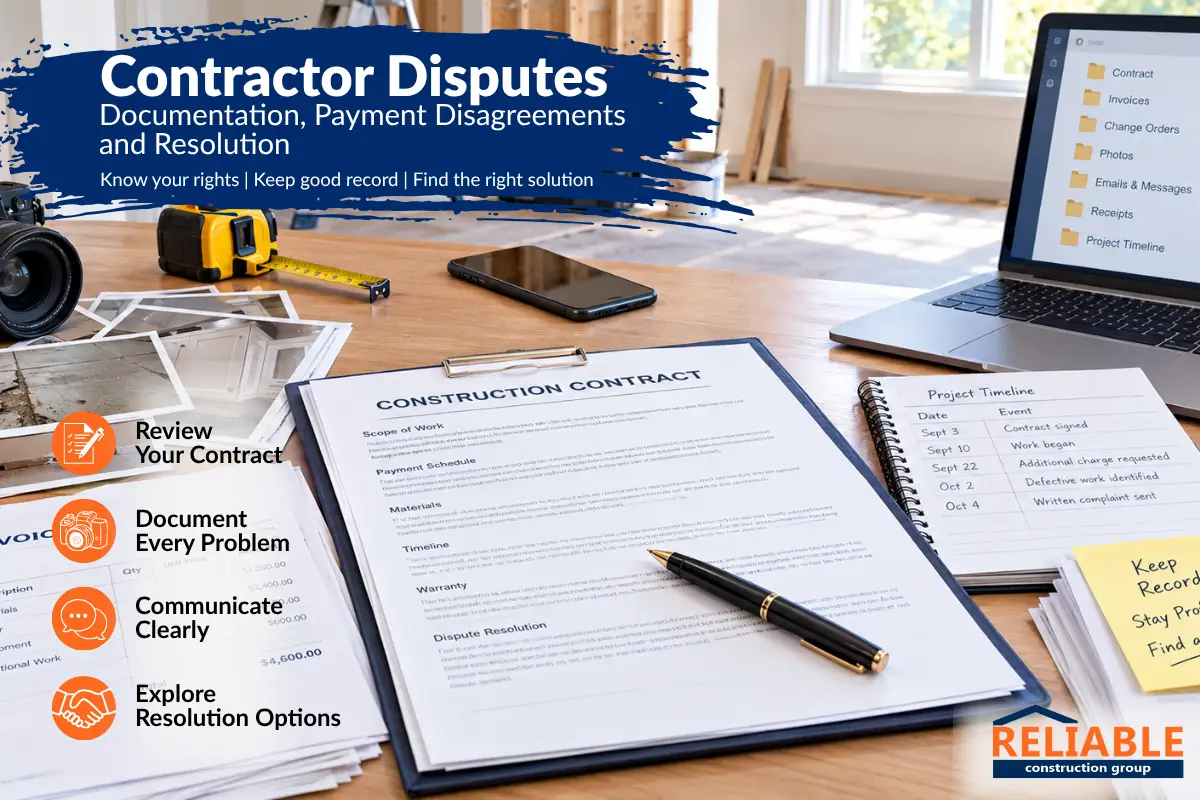
Build your dispute file
Start with records before you start with arguments. Kiplinger, quoting a senior legal editor at Nolo, advises gathering records of your payments and documenting every effort to reach the contractor, including calls and emails. The same source says that all the paperwork you keep, even if unofficial, can serve as evidence.
| What to keep | Why it helps |
|---|---|
| Contract, estimate, and every change order | Shows the agreed scope and price |
| Payment records: checks, card statements, transfers | Proves what you paid and when |
| Texts and emails, plus notes of every call | Shows promises, delays, and notice |
| Dated photos and video of the work | Shows the condition of the work over time |
| Permit and inspection records | Shows what the city reviewed and approved |
| Schedule, delay notices, and invoices | Shows missed dates and what was billed |
Turn verbal agreements into written ones
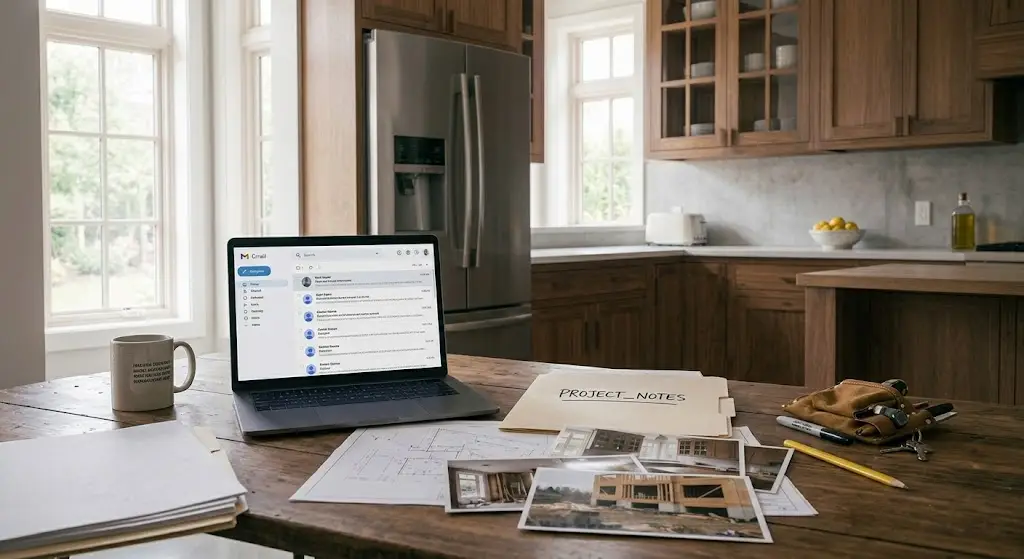
After any call or site visit, send a short text or email that recaps what was agreed. A line such as “As we discussed today, you will fix the trim by Friday” is not hostile. It creates a record both sides can check.
Payment disagreements
Money is where disputes turn serious. Three common situations call for different first moves.
| Situation | First move | Watch for |
|---|---|---|
| The invoice is higher than the contract | Compare it with the contract and written change orders, and ask for an itemized breakdown in writing | Extras agreed verbally with no change order |
| Work is incomplete or defective | List each item with its location and a photo, and give a written deadline | Do not stop all payments without legal advice |
| Work stops after a deposit | Send a written notice with a deadline, check the license status, and contact the licensing board or attorney general | Keep proof of every payment and contact attempt |
Be careful with withholding. Electrical Contractor magazine points to a court decision suggesting that an owner who holds back an excessive amount can end up in the wrong. Phoenix Home Remodeling says withholding the entire final payment over minor items is generally not appropriate once a project is substantially complete. Many contracts allow a reasonable holdback tied to the cost of unfinished items. Rules differ by state, so ask a lawyer before you stop paying.
Lien paperwork matters too. The text of the Illinois consumer rights pamphlet, as shown in a 2019 amending bill, says homeowners should get lien waivers from contractors and subcontractors where appropriate and consult an attorney about the Mechanics Lien Act. Other states have their own lien laws, so confirm yours before the final payment.
Write the demand letter
Kiplinger recommends a letter that lays out what you require and the deadline for meeting it, and says you will take legal action if your demands are not met. Kiplinger adds that such a letter should get the contractor’s attention. A clear letter is useful even if it fails, because it becomes part of your record.
- State the facts. Give the contract date, the scope, and what has been paid.
- Name the problems. List each item, with locations and dates, and attach photos.
- Say what you want. Ask for a specific fix, completion, or refund.
- Set a deadline. Choose a reasonable date, and ask your attorney or licensing agency what is typical in your state.
- Say what comes next. Note that you will file a complaint or pursue other remedies if the deadline passes.
- Keep proof of delivery. Use a method that records when the contractor received it.
Example (hypothetical wording): “On [date], we signed a contract for [scope] with a price of [amount]. The work listed below remains incomplete. Please finish these items by [date]. If they are not complete by then, I will file a complaint with [agency] and consider other remedies.”

Your escalation options
If a letter does not work, you have a ladder of options. Start with whatever your contract requires, since a dispute clause may dictate the order. HAR suggests that if your agreement lacks dispute-resolution language, you can ask to add it before work starts.
| Step | What it is | Good to know |
|---|---|---|
| 1. Written notice | A letter with your requirements and deadline | Kiplinger recommends it as the first formal step |
| 2. Licensing board or attorney general | A complaint to the agency that oversees the contractor | Kiplinger says the attorney general or a consumer protection agency may help if no licensing board covers the contractor |
| 3. Mediation | A neutral person helps both sides try to settle | Building Advisor says a contract can require mediation first, then binding arbitration or court |
| 4. Arbitration | A neutral decision-maker rules on the dispute | Building Advisor says most residential contracts specify it, and that it is generally faster and cheaper than court |
| 5. Small claims court | A simplified court process for smaller amounts | Kiplinger cites state limits typically from $3,000 to $15,000; check your state’s current limit |
| 6. Attorney and civil court | A lawsuit for larger amounts | Kiplinger notes fees can add up, and collecting can be hard if a contractor disappears |
Agencies can help, but they have limits. California’s contractor board says that once it receives a complaint, it notifies the contractor to encourage resolution, and a staff representative may try to mediate by phone. If that fails, options can include arbitration programs or further investigation, according to the board’s construction complaints guide. The board’s investigation still does not guarantee that you get your money back.
Arbitration and mediation sit under different rules. The American Arbitration Association says it created its Home Construction Arbitration Rules and Mediation Procedures for residential construction and remodeling disagreements between homeowners and builders. In mediation, as an AAA procedures document explains, an impartial person helps the parties try to settle. In arbitration, a neutral decision-maker adjudicates the dispute, as a law review article describes. Kiplinger adds that if your contract has an arbitration clause, you may have to resolve the dispute outside court, and some courts ask parties to try mediation first.
If your project is in Illinois
Illinois homeowners have a few extra tools. The Home Repair and Remodeling Act requires a written contract for work over $1,000, and contractors must provide a consumer rights pamphlet titled “Home Repair: Know Your Consumer Rights” for contracts over that amount, according to Public Act 101-0264. The same act points roofing complaints to the Illinois Department of Financial and Professional Regulation.
Illinois Attorney General press releases direct homeowners to the consumer complaint form at IllinoisAttorneyGeneral.gov/consumers. These are summaries of statutes that change over time, so read the current text of 815 ILCS 513 or ask the Attorney General’s office before relying on them.
Four traps that make disputes worse
The verbal add-on. The “while we’re at it” request that nobody writes down becomes tomorrow’s billing fight. Insist on a written change order with a revised price, as Maine’s guide advises, before extra work starts.
Sunk cost. After thousands of dollars and weeks of disruption, it feels impossible to change course. A failing project does not improve with more money behind it. Decide based on what finishing will cost from here, and get an independent opinion on the remaining work.
Heat-of-the-moment messaging. According to NIP Group, residential disputes can escalate fast, with a hostile text, a public review, or a demand for a full refund arriving where a written notice might have. Angry messages can become evidence against you. Keep every message short, factual, and polite.
Optimism about a quick fix. “They will come back Monday” can drift for weeks. Pick a deadline, write it down, and decide in advance what you will do if it passes.
Prevent the next dispute
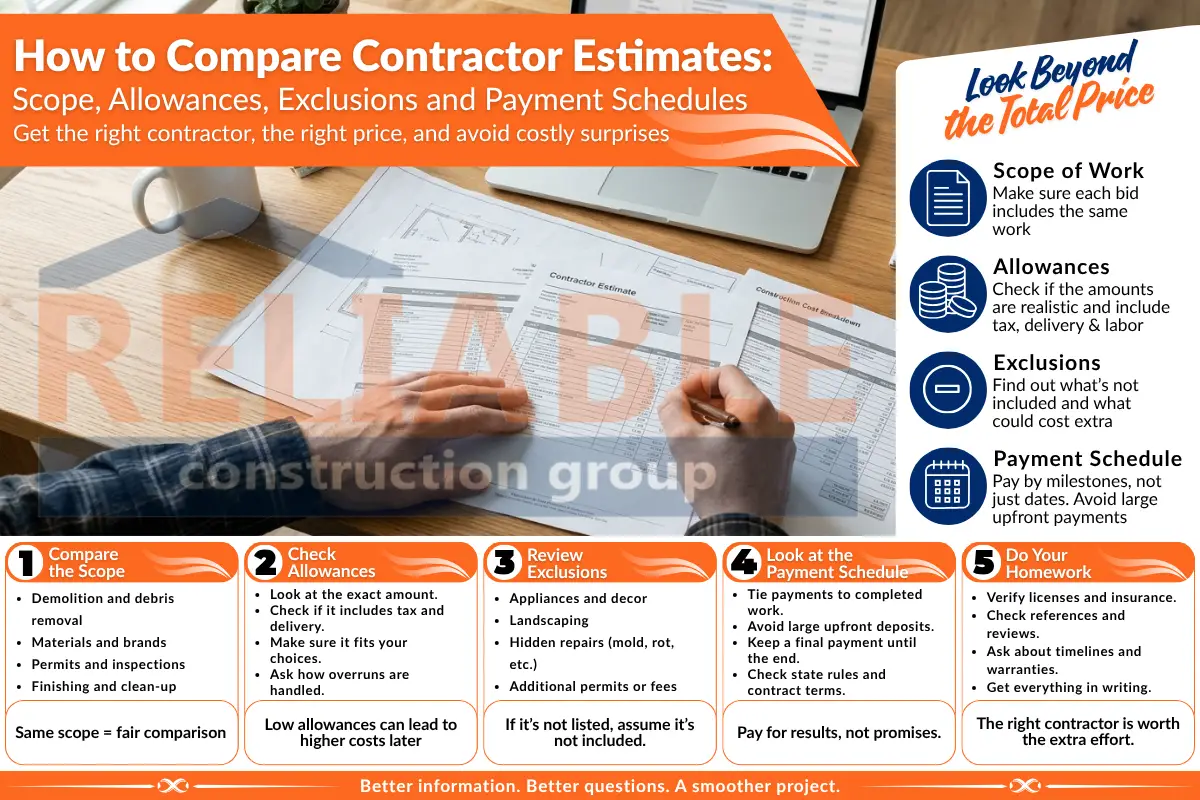
Prevention is cheaper than resolution. The best protection is a detailed written scope with milestones. Before you sign for a kitchen overhaul, a bathroom project, or a basement build-out, ask for materials, allowances, and a payment schedule in writing.
Look for itemized pricing too. A published price page shows one way a contractor can lay costs out. Past work you can review before signing gives you a way to check a contractor’s finish quality. Confirm licensing with your state board, and ask where a contractor says it works on the service area page or its own website.
- ☐Written contract with scope, price, and a payment schedule tied to milestones.
- ☐A change order process that requires a written price before extra work starts.
- ☐A dispute clause that says how disagreements will be handled.
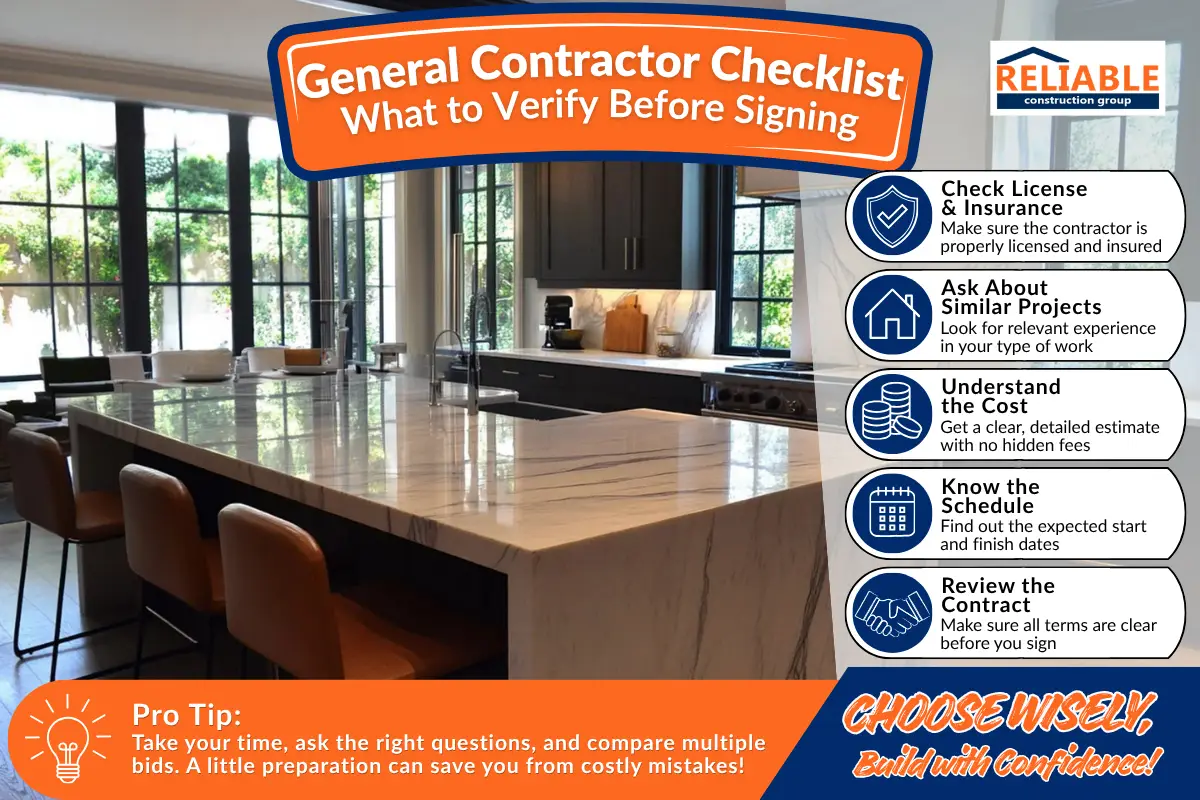
- ☐The contractor’s license status checked with your state board.
- ☐Itemized estimate with materials and allowances.
- ☐A folder, physical or digital, for every document, photo, and message.
When to call a lawyer
- The amount at stake is above your state’s small claims limit. California’s board suggests an attorney when damages exceed $10,000.
- The contractor has abandoned the project or cannot be reached.
- You received a lien notice, or you are being threatened with one.
- Your contract has an arbitration clause and you are unsure what it requires.
- The dispute involves structural, safety, or code problems.
If safety is at risk
If a problem involves gas, electrical, structural, or water hazards, have a licensed professional make it safe first and document what you found. Then follow the notice rules in your contract and your state’s law.
General information, not advice
This article is general information and not legal advice. Contractor licensing, contract rules, lien laws, and court limits vary by state. Talk with a licensed attorney in your state before you withhold payment, file a complaint, or sign a settlement.
FAQ
What is the first step in a contractor dispute?
Gather your records, then send a written letter that states your requirements and a deadline, as Kiplinger advises. Keep copies of everything.
Can I withhold payment from a contractor?
Sometimes, but be careful. A court decision cited by Electrical Contractor magazine suggests excessive withholding can put an owner in the wrong. Check your contract and your state’s rules, and ask a lawyer first.
What is the difference between mediation and arbitration?
In mediation, a neutral person helps both sides try to settle. In arbitration, a neutral decision-maker rules on the dispute. Building Advisor says arbitration is generally faster and cheaper than going to court.
Do I have to arbitrate if my contract says so?
Often yes, according to Kiplinger, which says an arbitration clause may require you to resolve the dispute outside court. Building Advisor notes the clause should be consistent with state law, so have a lawyer review it.
Who handles complaints about contractors?
Usually the state or local licensing board. Kiplinger says the attorney general or a consumer protection agency may help when no licensing board covers the contractor. In Illinois, roofing complaints go to the Department of Financial and Professional Regulation.
When is small claims court enough?
When the amount is under your state’s limit. Kiplinger cites typical limits from $3,000 to $15,000, though limits change. California’s contractor board suggests consulting an attorney above $10,000 in damages.
Final thoughts
A contractor dispute feels personal, but it is mostly a paperwork problem with a deadline attached. Build your file, write your letter, follow your contract’s process, and move up the ladder only as far as you need to.
Take one small step today: put every document for your project into a single folder. Whatever happens next, you will be glad it is there.
Planning a project and want a clear scope in writing?
A detailed estimate with milestones and itemized costs is the best protection against disputes. Share your plans and get a written scope and price.