You found the lot, or you already own it. You have a floor plan you love and a builder you trust. Then a loan officer asks for your plans, your builder’s license, and a draw schedule, and it hits you that this is not a regular mortgage. That reaction is normal, and it is fixable. Most of the confusion comes down to three questions: how much cash you bring, how the money gets released, and who checks the work.
This guide walks through construction loan requirements in plain language, covering typical down payment ranges, how loan draws and inspections work, and the common mistakes that can delay a project. Figures were checked in November 2026. Lenders set their own rules, so use every number here as a starting point for questions, not a promise.
Quick answer
Most lenders expect 20% or more down, solid credit, a licensed builder, and an approved plan and budget. Money is released in stages called draws, and an inspection usually comes before each one. FHA and VA one-time close loans can lower the down payment for eligible buyers. Ask two or three lenders for their requirements in writing before you commit to a builder.
What a construction loan really is
A construction loan is short-term financing for building a home, and it pays out as the work moves forward instead of all at once. According to Fortune, it can cover land, labor, materials, permits, and inspections. Lenders often set tighter credit and down payment rules because the home does not exist yet.
The Consumer Financial Protection Bureau notes that construction loans generally carry higher interest rates than longer-term purchase mortgages, and that the money arrives in a series of advances as building progresses. During the build you usually pay interest only on the amount drawn so far, as TD Bank explains. Early payments are small and grow as the balance rises. Fox Business adds that this interest-only stage can run for up to 18 months.
Small first step
Write down your total project cost as one number: land, construction, permits, and a cushion. Every requirement below is calculated from that number.
Credit, income, and paperwork
Lenders want proof you can carry the loan while the house is still a pile of lumber. A Nasdaq-hosted construction loan guide says lenders typically want a debt-to-income ratio of no more than 45%. Family Home Plans says most lenders look for a credit score of 680 or higher, while GO Mortgage describes a typical minimum of 620 for an FHA one-time close loan.
Expect to document income, assets, and debts the way you would for any mortgage, plus the building paperwork. Fannie Mae’s Selling Guide says credit documents for a single-closing construction-to-permanent loan can be no more than four months old on the closing date. A long delay before closing can mean pulling them again.
Lender rules differ, and your own numbers matter more than any national benchmark. A short call with a loan officer before you pay for plans can save real money.
Down payment requirements
This is the number most people worry about first. The Nasdaq-hosted guide says borrowers usually put at least 20% down, and that many lenders ask for 25% to 30% of construction costs. BiggerPockets cites 20% to 25% of total project cost, and Biz2Credit says most construction loans require at least 20% down. Education First Federal Credit Union gives a lower figure, saying many private lenders ask for 5% to 20% of the loan amount.
Why the spread? Each lender sets its own rules, and the loan program matters. Government-backed options and some credit unions sit at the low end.
| Loan route | Typical down payment | Where the figure comes from |
|---|---|---|
| Conventional construction loan | 20% or more is common; some lenders ask for 25% to 30% | Nasdaq-hosted guide, BiggerPockets, Biz2Credit |
| Some private lenders and credit unions | 5% to 20% of the loan amount | Education First Federal Credit Union |
| Fannie Mae construction-to-permanent | Maximum 95% loan-to-value, subject to its eligibility matrix (about 5% down, our estimate) | Fannie Mae overview |
| FHA one-time close | 3.5% minimum | GO Mortgage |
| VA one-time close | No down payment for eligible veterans with full entitlement | Valoan Network, GO Mortgage |
Example (our arithmetic, an estimate): on a $400,000 project that includes land, a 20% down payment is $80,000, 25% is $100,000, and 30% is $120,000. Closing costs and a cash cushion come on top.
The Nasdaq-hosted guide also says borrowers who put down less than 20% may have to pay private mortgage insurance. Ask each lender whether that applies to the loan you are quoting.
If you already own the land
HUD’s FHA policy letter says a borrower can use cash invested in the acquisition cost or equity in the land to meet the minimum required investment. Conventional lenders treat land equity differently, so ask each one before you assume it counts. That letter dates from 2019, so confirm the current rule with an FHA lender.
Builder, plans, and budget approval
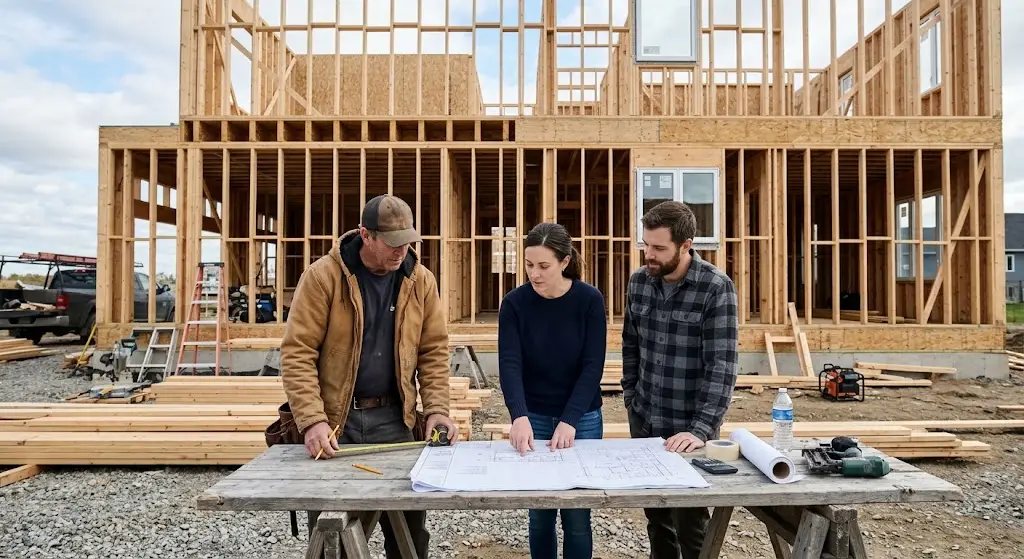
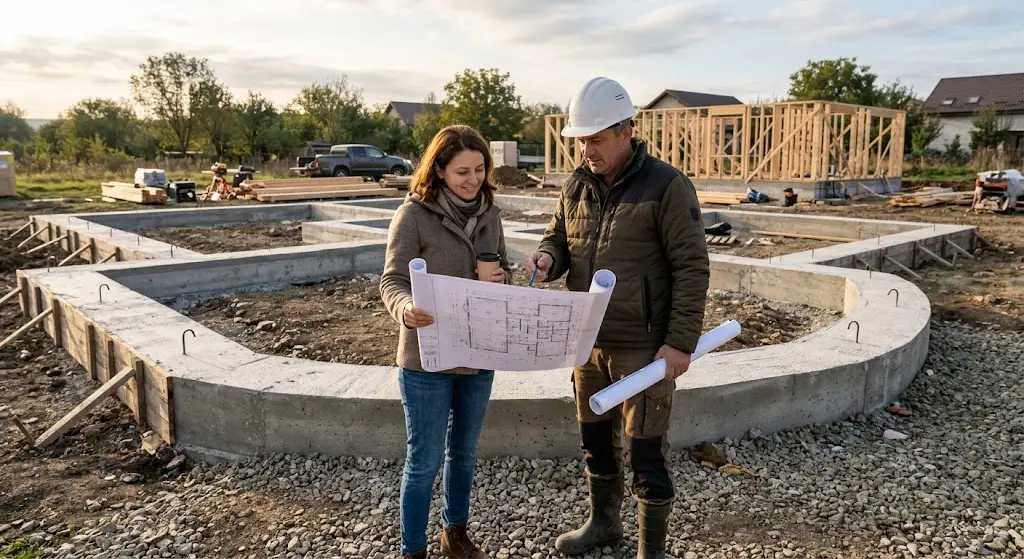
Lenders lend against a plan, not a promise, so they review who is building and what is being built. Fortune says you typically need a lender-approved builder. For FHA construction-to-permanent loans, HUD’s policy letter requires a licensed general contractor and lets you act as your own builder only if you are a licensed general contractor yourself. The Nasdaq-hosted guide lists project and construction budget approval as a standard requirement.
Start by looking at how a contractor documents finished work. Completed project galleries show the scope, finishes, and range of homes a builder handles. If you live near Chicago, the service area list tells you which communities a local contractor covers. Licensing rules vary by state, so confirm any builder’s license with your state licensing board.
Your budget needs line items, not a rounded total. An itemized budget speeds approval, and it makes draws easier later because every payment ties back to a line. For a sense of how pricing can be laid out, look at an example of published pricing. Costs vary by region, so use it for structure, not as your number.
How draws work
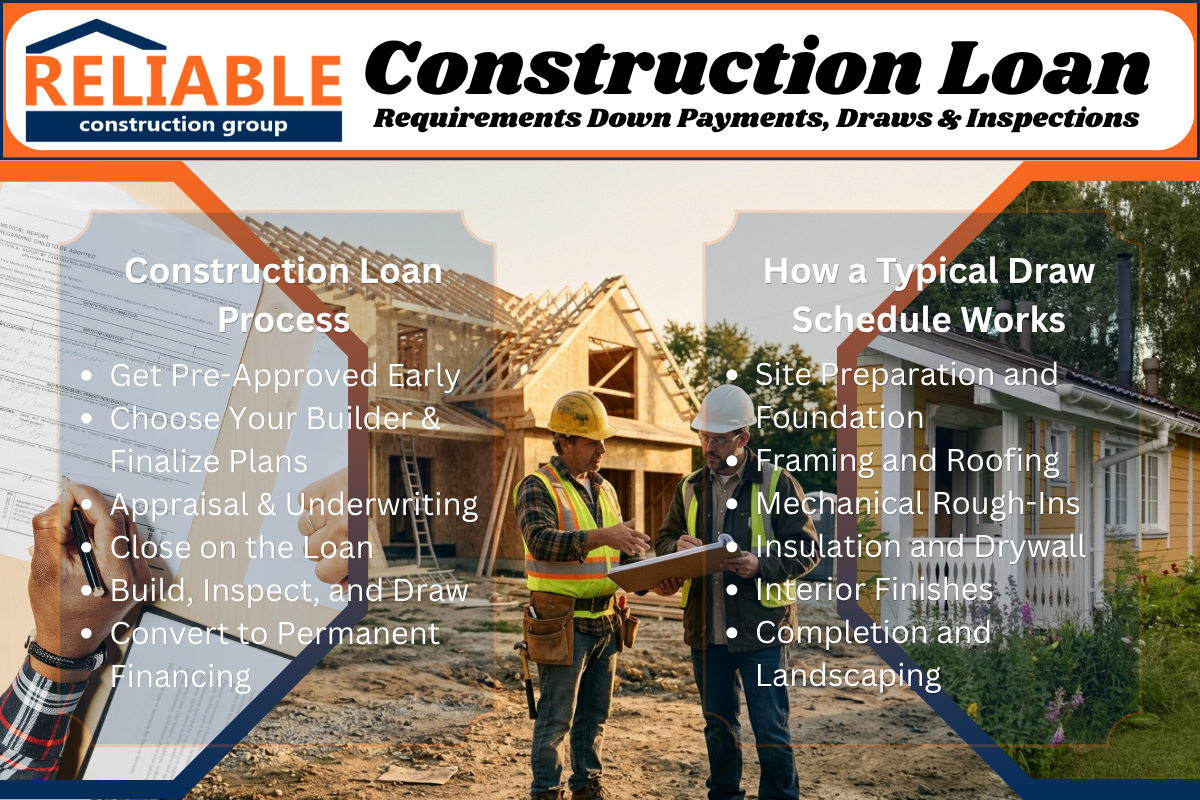
A draw is a payment released from the loan to your builder after a stage of work is done. Fortune describes a typical schedule tied to milestones: the foundation pour, framing, mechanical rough-ins for plumbing, HVAC, and electrical, drywall and insulation, and final completion. In a single-closing loan, Fannie Mae’s guide says the lender manages the disbursement to the builder, contractor, or suppliers.
| Milestone | A question to ask your lender |
|---|---|
| Foundation pour | Can the first draw cover materials, or only completed work? |
| Framing | Is each draw a set amount or a percentage of completion? |
| Rough-ins (plumbing, HVAC, electrical) | Who orders the inspection, and who pays its fee? |
| Drywall and insulation | How many days pass between a draw request and payment? |
| Final completion | Which final inspection or paperwork releases the last payment? |
Timing matters more than most people expect. One credit union, WESTconsin, says it approves and disburses draw requests within three to five business days of receiving them. Your lender may be faster or slower. Projul’s draw guide suggests building 5 to 10 days of float into the cash flow plan, because inspections slip and paperwork gets lost.
Example (our arithmetic, an estimate): say your loan is approved for $400,000 and $100,000 has been drawn so far. Interest is calculated on the $100,000, which is 25% of the full amount, not on the whole $400,000. As more draws come in, the monthly interest payment rises with them.
Ask about an interest reserve
Fortune says some loans set aside part of the amount to cover interest payments during the build. If yours does, you will pay less out of pocket each month, but the reserve is still part of what you borrow.
Inspections before each draw
Lenders do not release money for work they cannot verify. The Nasdaq-hosted guide says your lender will likely send an inspector to evaluate the status of construction before each payment. Fortune says lenders may require inspections before releasing draws.
Keep two kinds of inspections straight. Lender inspections confirm progress so money can be released. Building inspections from the city or county confirm the work meets code. Umpqua Bank’s construction FAQ says those local inspections run through the local jurisdiction and that your contractor works with it. Ask your lender whether it wants proof of code inspections along with its own check.

The last inspection is the big one. For single-closing loans sold to Fannie Mae, the guide requires an appraisal update or completion report, Form 1004D, with a certification that the work is finished. If that report shows the value fell, the lender must get a new appraisal and requalify you. VA loans also call for a final inspection, according to Veterans United, to confirm the home meets VA minimum property requirements and was built to the plans.
A lender inspection is not your inspection
A lender’s inspector checks progress for the lender. Veterans United says a home inspection is still highly recommended even for a brand-new home. Consider whether you want your own independent inspector at key stages.
Converting to a permanent mortgage
In a one-time close loan, the construction loan converts automatically to a permanent mortgage when building ends, per Fannie Mae’s guide. That does not mean nothing gets rechecked. Fannie Mae requires requalification if the loan-to-value ratio rose because the property value dropped, or if the lender had to pull updated credit documents.
Time limits apply too. For single-closing loans sold to Fannie Mae, no single construction period can exceed 12 months and the total cannot exceed 18, and the guide says exceptions will not be granted. If your build is likely to run longer, a two-closing structure may be needed. A realistic schedule from your builder is part of your loan plan.

One-time close, construction-only, and renovation loans
Not every construction loan is built the same way. Fortune explains that a construction-only loan covers just the build, while a construction-to-permanent loan combines both phases and may involve one or two closings. Freddie Mac describes the same one-time or two-time options for its program. TD Bank notes that a one-time close means a single closing at the start of the project.
| Loan type | What it covers | Main trade-off |
|---|---|---|
| Construction-only | The build phase only | You need separate permanent financing afterward, which means a second approval |
| One-time close | Build and permanent mortgage in one loan | Fewer closings, but more decisions are locked in early |
| Two-closing | A construction loan, then a separate mortgage | More flexibility on the final loan, but two sets of paperwork |
If you are remodeling or adding on to a home you own, the right product may be different. Opendoor lists renovation loans such as FHA 203(k) and Fannie Mae HomeStyle as separate options from new-build construction loans. Projects like a bathroom addition project, an island addition kitchen remodel, or finishing a basement may fit a renovation loan, home equity, or cash instead. Your lender decides what fits your scope.
Three mistakes that cost time and money
The “while we’re at it” upgrade. You are already opening a wall, so why not move the island or add a second bath? Every change touches a budget your lender already approved. Fannie Mae’s guide allows a loan amount increase at conversion only to cover documented increased construction costs, so surprise upgrades may come out of your own pocket. If your project is a full kitchen renovation, settle layout, appliances, and finishes before the loan is sized.
Sunk cost. After you have paid for plans, permits, and an appraisal, walking away feels impossible even when the numbers stop working. Set a stop-loss budget with your builder before you close, and treat it as a rule rather than a suggestion.
Timeline optimism. Fox Business notes the interest-only period can run up to 18 months, and Fannie Mae caps single-closing loans at 18 months in total. Add buffer weeks to any schedule you hear in a sales meeting, and expect weather and inspections to use some of them.
Myths vs facts
| Myth | Fact |
|---|---|
| I get the full loan amount at closing. | Funds are released in draws as work progresses (Fortune, CFPB). |
| The lender’s inspector and the city inspector are the same. | Lender inspections confirm progress for draws, while local building inspections run through the city or county (Nasdaq-hosted guide, Umpqua Bank). |
| Land I own will not help with my down payment. | For FHA loans, HUD allows land equity to count toward the minimum investment. Other lenders vary (HUD). |
| Once the loan converts, nothing is rechecked. | Requalification is required if the value falls or updated credit documents are needed (Fannie Mae). |
Your pre-application checklist
Small first actions beat a giant to-do list. Work through these in order and you will walk into your first lender meeting prepared.
- ☐Total project cost written down, including land, permits, and a cushion.
- ☐Credit report reviewed and debts tallied against the 45% debt-to-income benchmark.
- ☐Down payment cash identified, plus the estimated value of the land if you own it.
- ☐Builder’s license verified with your state licensing board, and a draft contract in hand.
- ☐Itemized budget and plans ready to hand to the lender.
- ☐Written requirements from at least two lenders, including draw timing and inspection fees.
- ☐A schedule from your builder that fits the lender’s construction period limits.
- ☐Permit requirements confirmed with your local building department.
General information, not advice
This article gives general information about financing and is not financial or legal advice. Talk with a licensed loan officer, and consider an attorney to review your building contract. Rules, permits, and prices vary by state, city, and lender, so confirm details with your lender and your local building department.

FAQ
How much down payment do I need for a construction loan?
Many lenders ask for 20% or more, and some ask for 25% to 30%, according to a Nasdaq-hosted guide and BiggerPockets. Some credit unions and private lenders quote 5% to 20%. FHA one-time close loans list a 3.5% minimum, and eligible veterans may qualify for a VA loan with no down payment. Get a written quote from each lender.
How do construction loan draws work?
The lender releases money to your builder at set milestones, usually after an inspection. You typically pay interest only on the amount drawn so far, so your payment rises as more money is released.
Who pays for the inspections and draw fees?
Fee schedules differ by lender, and there is no reliable national figure to quote here. Ask each lender for its inspection and draw fees in writing, and compare them side by side.
Can I act as my own builder?
Often no. HUD’s FHA policy allows it only if you are a licensed general contractor, and FHALoans.com says borrowers generally cannot be their own builder. Other lenders have their own rules, so ask before you plan around it.
What happens if the build runs long?
For single-closing loans sold to Fannie Mae, the construction period is capped at 12 months per period and 18 months total, with no exceptions. If your schedule could run past that, ask whether a two-closing loan fits better.
Is a construction loan the same as a renovation loan?
No. Construction loans fund building a home, while products like FHA 203(k) and Fannie Mae HomeStyle are renovation loans, according to Opendoor. The right choice depends on your project and what your lender offers.
Final thoughts
Construction financing feels heavy because you are paying for something that does not exist yet. Break it into small moves. Set your total number, collect two written lender checklists, and line up your builder’s schedule with the lender’s draw and inspection process.
Once those pieces match, the loan becomes routine paperwork instead of a mystery. Take it one requirement at a time, and you will get there.
Planning a build, addition, or major remodel?
Get a clear scope and a written estimate before you finalize your loan numbers. A detailed estimate makes every lender conversation easier.